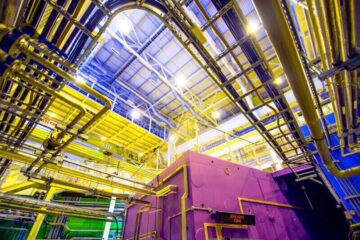
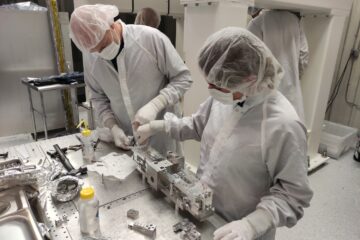
STFC’s mission is to deliver world-leading national and international research and innovation capabilities and, through those, discover the secrets of the Universe. Our major research and innovation campuses at Harwell, Daresbury and research facilities across the UK and overseas support fundamental research in astronomy, physics, computational science and space science.
Apply for funding to commercialise your technology or science developed from the STFC particle physics, astronomy and nuclear physics (PPAN) community.
The STFC early stage research and development scheme aims to support the PPAN community to develop technology and science towards commercialisation.
You must be based at a UK research organisation eligible for STFC funding.